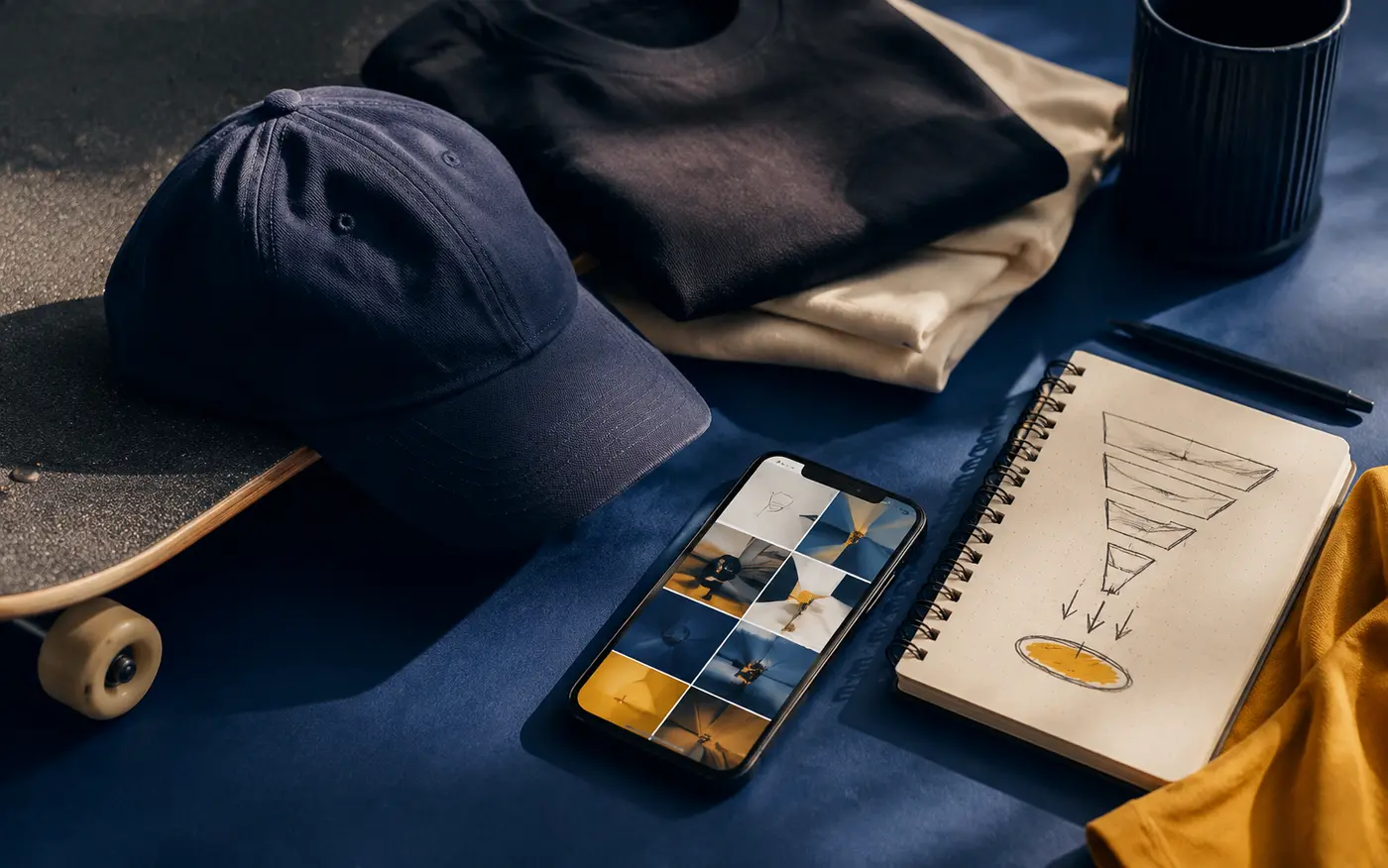
A streetwear brand is built in culture before it is built in a cart.
Urban Monkey is a useful digital marketing case study because the brand story is not simply “run advertisements, get sales.” The public record describes a business that began around an underserved community, used products as a way to participate in that community, and gradually widened its commercial reach.
Urban Monkey’s own About page says its goal in 2013 was to increase awareness of Mumbai’s skate culture. A 2020 YourStory founder interview adds important context: founder Yash Gangwal saw limited access to skateboards, headwear and related products after returning to India, and positioned the brand around skateboarding, streetwear and music.
More than apparel: a youth culture position with commerce attached.
Urban Monkey is a streetwear business based in Mumbai, selling categories including headwear, apparel, eyewear and accessories. Its official language centres India’s underground street community, while public reporting connects the brand to skaters, hip hop artists, dancers, athletes and creators.
That position matters. Streetwear competes on more than utility or price. Product design, cultural credibility, visual identity, scarcity, who wears the product and where the brand appears can all shape perceived value. The competitive set includes global labels, homegrown D2C brands, labels led by creators, marketplaces and countless social first sellers competing for the same attention.
Public sources do not provide a complete customer segmentation study, so it would be inaccurate to claim an exact demographic profile. What they do consistently support is a focus on younger, culturally aware audiences and communities around skateboarding, music and street expression.
Build relevance, find repeatable demand and make the economics work.
Any emerging streetwear ecommerce brand must solve several connected problems: earn attention from the right people, look distinctive in a crowded feed, turn cultural interest into product discovery, and make the buying experience dependable enough to convert that interest.
For Urban Monkey specifically, the YourStory interview documents two operational challenges as of 2020: higher return ratios on cash on delivery orders and difficulty sourcing manufacturers that met the brand’s quality expectations. The interview also describes early category experiments that did not work, followed by a stronger focus on products such as sunglasses, headwear, wallets and storage bags.
These are reminders that marketing cannot be separated from product and operations. A powerful post cannot repair the wrong assortment, inconsistent quality or a checkout and delivery process that damages margins.
Several channels, one consistent cultural signal.
Influencer and cultural marketing
YourStory and the Times of India report public associations or collaborations involving names such as Rannvijay Singha, Raftaar and Bhuvan Bam. The sources also report product visibility connected with Gully Boy. The important strategic point is not celebrity scale alone; it is the fit between the brand, the person and the cultural context.
When that fit is credible, a collaboration can provide reach, recognition and social proof at the same time. When it is not credible, large reach can still produce weak commercial intent.
SEO and organic discovery
The public sources reviewed for this case study do not document a specific Urban Monkey SEO programme, keyword strategy or organic traffic result. We therefore should not invent one. What the business model does show is why search can matter: social activity creates curiosity, while category pages, product pages and useful editorial content can capture people who later search for the brand or for products such as caps, streetwear and skate accessories.
MarqHive analysis: for a D2C brand, social discovery and search discovery can work as a pair. Social helps create demand; an owned, technically sound website helps capture it when intent becomes more specific.
Content and brand identity
Urban Monkey’s official About page consistently frames the business around representation, creativity and India’s underground street community. Whether a visitor encounters a cap, collaboration, event or product page, that recognisable idea can reduce the distance between “I saw this” and “I understand what this brand stands for.”
Consistency does not mean repeating one layout. It means repeating the same strategic signal through design, tone, subject matter and product choices.
Ecommerce and conversion
In the 2020 YourStory interview, Gangwal said Urban Monkey was selling through its own website after leaving large marketplaces that had not produced enough customers. By May 2024, Indian Retailer reported a new distribution step: more than 170 styles offered on Myntra through its Rising Stars programme, with plans to use Myntra’s content led discovery features.
This is not a contradiction so much as a reminder that channel strategy can evolve. Owned commerce preserves customer experience and brand control; selective marketplace distribution can add reach. The right balance depends on margin, discovery, customer data and the brand’s stage.
For businesses improving their own conversion path, MarqHive’s lead management and follow up service explains how website enquiries can move into a visible system with a clear next action rather than ending at a form submission.
Documented signals with the source attached.
These figures come from dated public reporting and founder statements. They provide context, not a current audit of Urban Monkey’s performance.
Why This Worked
The sources establish events, product decisions, collaborations and distribution moves. The principles below are MarqHive’s interpretation of why those choices can reinforce one another; they are not claims made by Urban Monkey.
A specific audience
A brand built around a defined culture has clearer choices about products, creators, language and platforms.
Cultural relevance
Participation in skate, music and creator communities gave the brand a context that advertising alone cannot manufacture.
Consistent identity
A recognisable point of view helps individual posts, products and appearances accumulate into one brand memory.
Social proof
Relevant artists, events and media moments can reduce perceived risk and make a young label easier to recognise.
Channels working together
Community creates attention; social content distributes it; a website or marketplace gives that attention somewhere to convert.
Attention becoming owned traffic
An owned website gives a brand more control over story, customer experience and future relationships than a social feed alone.
What Small Businesses Can Learn
A local retailer, consultant or growing Indian brand does not need Urban Monkey’s category, network or budget to use the underlying principles. Start at a scale you can sustain.
- 01
Know exactly who you are trying to reach.
Write down the customer, problem, buying moment and language they use. A smaller relevant audience is more useful than broad, accidental reach.
- 02
Build a recognisable digital identity.
Use a consistent promise, visual system and point of view across your website, social profiles, proposals and customer messages.
- 03
Earn relevance before buying reach.
Partner with local creators, communities or complementary businesses where there is genuine audience fit. Document the work clearly and obtain permission before publishing results.
- 04
Use social to create demand and your website to capture it.
Give interested people a clear page to learn, compare and enquire. Do not make them search through weeks of posts for basic information.
- 05
Do not depend entirely on paid advertising.
Build useful pages, customer FAQs and search friendly content that can keep working after a campaign ends. Paid media can accelerate a system; it should not be the only system.
- 06
Measure business outcomes, not vanity metrics.
Track qualified enquiries, response time, conversion, repeat purchase and contribution margin. Likes and followers matter only when they connect to a business objective.
For the operational step after an enquiry, see MarqHive’s guides to a simple lead follow up system and a structured WhatsApp enquiry workflow.
Questions about Urban Monkey’s digital marketing strategy
What makes Urban Monkey a useful digital marketing case study?
Its public story connects a defined street culture audience with community participation, a consistent brand position, owned ecommerce and selective distribution. The value is in how those elements reinforce one another.
Did MarqHive work with Urban Monkey?
No. This is an independent MarqHive analysis based on public company information, founder interviews and reported business developments.
What can a small business learn from Urban Monkey?
Choose a specific audience, build a recognisable identity, participate genuinely in relevant communities and give social attention a clear owned page where it can convert.

Clear lessons from real digital growth stories.
MarqHive explores digital growth strategies, marketing trends and real world business examples to help businesses understand how modern digital marketing works.
Where the documented facts came from.
MarqHive reviewed these pages on 17 August 2026. Company statements and figures reported by the founder are identified as such in the analysis.
- 01Urban Monkey: About Us Urban Monkey · Accessed 17 August 2026
The company's own account of its purpose, community positioning, timeline and founder story.
- 02In just 5 years, this entrepreneur built a Rs 5 Cr hip hop products brand YourStory / SMBStory · 27 February 2020
A founder interview covering product decisions, community activity, owned ecommerce and operational challenges.
- 03Here's how this hypebeast fashion brand made it to Shark Tank India Times of India · 6 February 2022
Reporting on the brand's community visibility, cultural collaborations and Shark Tank India appearance.
- 04Myntra's Rising Stars Program Welcomes Urban Monkey Indian Retailer · 1 May 2024
Reporting on the Myntra distribution launch, assortment and stated growth ambition.
Social media as a community surface
Streetwear is naturally visual, but the more important principle is social context. Products gain meaning when they appear around the music, movement and people the intended audience already values. The 2020 YourStory interview says Urban Monkey sponsored, organised or collaborated with more than 150 small events and had built a network of more than 250 underground artists, athletes and musicians. Those are figures reported by the founder, not independently audited engagement metrics.
For a social strategy, this changes the content question from “What should we post?” to “Which community are we useful to, and what can we make together?” Content becomes proof of participation rather than a sequence of product advertisements.